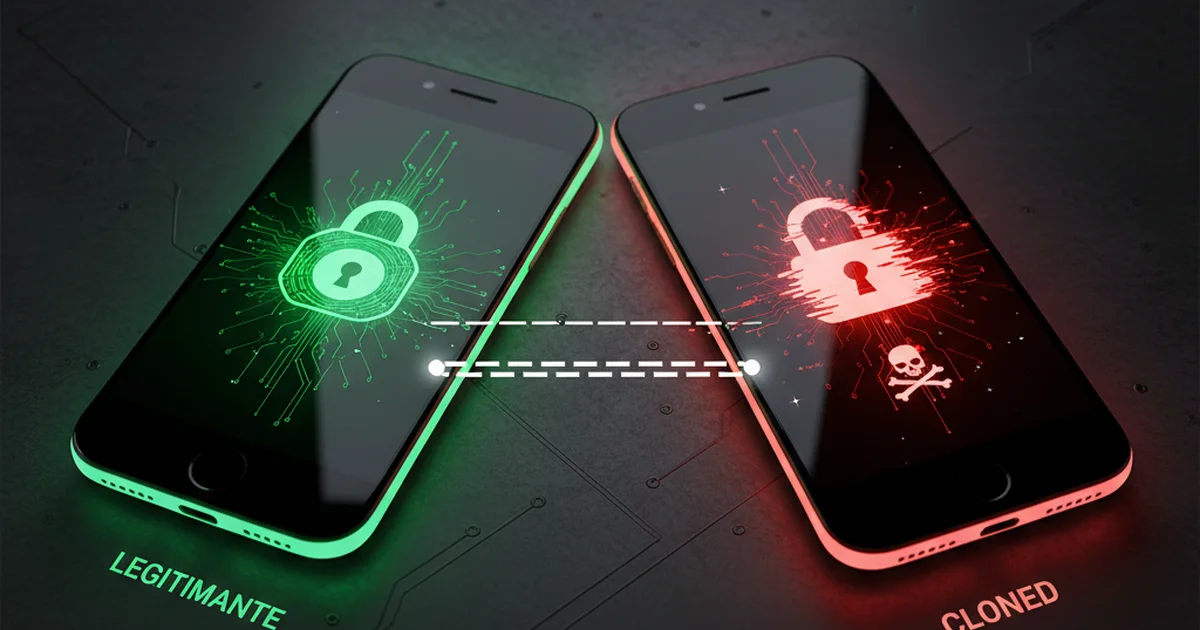

Can two phones have the same IMEI number? The short answer is: they shouldn’t — but they can, and it happens more often than people realise. Every mobile device is assigned a globally unique 15-digit IMEI (International Mobile Equipment Identity) at the factory. No two legitimate phones should ever share one. Yet through a criminal practice known as IMEI cloning, fraudsters duplicate a valid IMEI from one device onto another — creating an illegal twin that can wreak havoc on the original owner.

This guide explains exactly how IMEI cloning works, why it’s done, how to detect it, and what steps you should take if your IMEI has been copied.
Table of Contents
- What Is an IMEI and Why Should It Be Unique?
- Can Two Phones Legally Share an IMEI?
- What Is IMEI Cloning?
- How Does IMEI Cloning Work?
- Why Do Criminals Clone IMEIs?
- How to Detect If Your IMEI Has Been Cloned
- What Happens When Two Phones Share an IMEI on the Same Network?
- Is IMEI Cloning Illegal?
- What to Do If Your IMEI Has Been Cloned
- Frequently Asked Questions
What Is an IMEI and Why Should It Be Unique?
Your phone’s IMEI is its fingerprint — a 15-digit number permanently assigned by the manufacturer that identifies your specific handset to every mobile network in the world. It is stored in the device’s firmware and is transmitted to the carrier every time your phone connects to a cell tower.
IMEI numbers follow the GSMA’s international standard and are registered in the Global Equipment Identity Register (EIR). The structure is tightly controlled: the first 8 digits form the Type Allocation Code (TAC), which identifies the manufacturer and model, while the remaining digits identify the specific unit. You can learn more about how IMEI number structure works in our dedicated guide.
Because every IMEI is meant to be unique, networks use it to:
- Identify devices connecting to the network
- Block stolen or blacklisted handsets
- Track suspicious activity
- Enable law enforcement investigations
Can Two Phones Legally Share an IMEI?
No — under no legitimate circumstances should two active phones share the same IMEI. International telecommunications standards enforced by the GSMA strictly prohibit duplicate IMEIs. Each IMEI block is allocated to a specific manufacturer for a specific model range, and once a unit rolls off the production line, its IMEI is permanently assigned.
However, there are a small number of exceptions worth knowing:
- Manufacturing defects: Very rarely, factory errors have resulted in batches of phones shipped with the same IMEI. This is considered a serious violation and manufacturers must correct it.
- Counterfeit phones: Cheap counterfeit handsets manufactured in unregulated factories sometimes ship with fake or duplicated IMEIs — often copying a real IMEI from a legitimate device.
- Deliberate cloning: The most common cause — criminal actors intentionally copy a valid IMEI onto a stolen or blacklisted phone.
What Is IMEI Cloning?
IMEI cloning is the illegal process of copying the IMEI number from one legitimate phone and programming it into another device — typically a stolen, blacklisted, or counterfeit handset. The goal is to disguise the second device as the first, making it appear legitimate to mobile networks and evading blacklists.
Think of it as identity theft for a mobile phone. Just as a criminal might clone a credit card or forge an ID document, IMEI cloning creates a fraudulent “copy” of a real device identity. The victim’s phone continues working normally — but somewhere else, a criminal is using a phone that impersonates theirs.
This is closely related to broader IMEI scams and fraud tactics that target both individual users and mobile networks globally.
How Does IMEI Cloning Work?
IMEI cloning requires specialised software and, in some cases, physical access to the target device. Here’s how it typically works:
Step 1: Obtaining a Valid IMEI
The fraudster first needs a real, valid IMEI from a legitimate, non-blacklisted phone. They can obtain this by:
- Scanning the IMEI printed on phone boxes in stores or warehouses
- Accessing IMEI databases through data breaches
- Using IMEI-reading apps on a target’s device
- Recording IMEI numbers from phones left unattended (e.g. in repair shops)
- Purchasing stolen IMEI lists from criminal marketplaces on the dark web
Step 2: Reprogramming the Target Device
Once a valid IMEI is obtained, the criminal uses specialised software tools — often called IMEI changers or flashing tools — to overwrite the IMEI stored in the target phone’s baseband processor (the chip that manages cellular communication). On older Android devices, this was possible through engineer mode or AT commands. Modern devices have hardware-level protections, but vulnerabilities still exist, particularly on low-cost Android handsets.
Step 3: Using the Cloned Device
The cloned phone now broadcasts the legitimate IMEI whenever it connects to a network. From the carrier’s perspective, it looks identical to the original device. IMEI blacklisting systems will not flag it — because the IMEI it’s using is clean.
Why Do Criminals Clone IMEIs?
IMEI cloning serves several criminal purposes:
- Bypass blacklists: A stolen phone that has been blacklisted can be “cleaned” by cloning a valid IMEI onto it, allowing it to connect to networks again.
- Avoid surveillance: Law enforcement and intelligence agencies track suspects via IMEI. Criminals use cloned IMEIs to avoid detection or to frame innocent people.
- Insurance fraud: A cloned phone can be used to “prove” a device is somewhere it isn’t — complicating insurance claims.
- Resell stolen phones: A blacklisted phone with a cloned IMEI can be sold to an unsuspecting buyer as a clean, working device. Always check the IMEI before buying a used phone to protect yourself.
- Evade roaming charges: In some fraud schemes, cloned IMEIs are used to exploit carrier billing systems.
How to Detect If Your IMEI Has Been Cloned
Detecting IMEI cloning is not always straightforward, but here are the key warning signs and steps to investigate:
1. Unusual Network Behaviour
If your phone suddenly drops calls, gets disconnected from the network unexpectedly, or shows “No Service” in areas with good coverage, it could indicate a network conflict caused by a duplicate IMEI. When two devices with the same IMEI try to connect to the same network simultaneously, the network may disconnect one or both.
2. Unexpected Charges on Your Bill
If you notice calls, SMS messages, or data usage you don’t recognise on your carrier bill, it could be related to a cloned device generating activity under your IMEI.
3. Run an IMEI Check
Use an official IMEI check tool to verify your device’s status. If your IMEI appears on a blacklist and you haven’t reported it stolen, someone may have cloned your IMEI onto a stolen device that was subsequently reported.
4. Contact Your Carrier
Your carrier has access to network logs that can show if multiple devices are connecting with your IMEI simultaneously. If you suspect cloning, call your carrier’s fraud department immediately.
5. Check Your IMEI Matches the Box
If you’re buying a second-hand device, always compare the IMEI printed on the box, the one in Settings > About Phone, and the one under the battery (if removable) or in the SIM tray. Any mismatch is a red flag for cloning.
What Happens When Two Phones Share an IMEI on the Same Network?
When two phones with the same IMEI try to connect simultaneously to the same carrier’s network, several things can happen:
- Network collision: The network detects a conflict and may disconnect one or both devices
- Authentication failures: The network may flag the duplicate and trigger a fraud alert
- Automatic blacklisting: Some carriers automatically blacklist an IMEI if duplicate connections are detected
- Silent monitoring: In some cases, law enforcement may use the duplicate as an opportunity to track the criminal device
If the two devices are on different carriers or in different countries, the conflict may not be immediately detected — which is why international IMEI blacklist sharing between countries, as described in IMEI blocking and recovery systems worldwide, is so critical.
Is IMEI Cloning Illegal?
Yes — IMEI cloning is illegal in virtually every country. Here’s how major jurisdictions treat it:
- USA: The Wireless Telephone Protection Act (1998) makes it a federal crime to knowingly use, produce, or traffic a device with an altered or cloned IMEI. Penalties include up to 15 years in prison.
- UK: Covered under the Mobile Telephones (Re-programming) Act 2002. Reprogramming or selling a phone with an altered IMEI carries up to 5 years imprisonment.
- India: The Telecom Act 2023 prohibits IMEI tampering. Offenders face up to 3 years imprisonment and fines under CEIR regulations.
- EU: Covered under national criminal law in each member state, with GDPR implications for the privacy violations involved.
- Australia: Prohibited under the Criminal Code Act 1995 and the Telecommunications Act 1997.
For a full breakdown of IMEI-related laws by country, see our guide on whether IMEI tracking is legal in your region.
What to Do If Your IMEI Has Been Cloned
If you suspect your IMEI has been cloned, act quickly:
- Contact your carrier immediately. Report the suspected cloning to your network provider’s fraud department. They can investigate network logs and take action.
- File a police report. IMEI cloning is a criminal offence. File a report with your local police, providing your IMEI number and any evidence of suspicious activity.
- Request a new IMEI from the carrier. In some jurisdictions, carriers can work with manufacturers to issue a new IMEI for your legitimate device.
- Monitor your bills closely. Watch for unexplained charges and dispute them immediately.
- Protect your IMEI going forward. Follow IMEI security and privacy best practices — never share your IMEI publicly, and be cautious with repair shops.
Why Trust This Guide
TrackMobileIMEI is a specialist resource dedicated to IMEI tracking, security, and mobile device identity. Our content is researched using official GSMA standards, national telecommunications authority publications (FCC, Ofcom, TRAI, ACMA), and verified legal statutes from multiple jurisdictions. We do not promote any paid IMEI unlocking or cloning services — our mission is to help users protect themselves and their devices.
Frequently Asked Questions
Q: Can I check if my IMEI has been cloned online?
A: You can use official IMEI check tools to see your device’s blacklist and warranty status. If your phone appears blacklisted and you haven’t reported it stolen, cloning is a possibility. Contact your carrier for a full network-level investigation.
Q: Will a factory reset remove a cloned IMEI?
A: No. A factory reset only wipes user data — it does not change the IMEI stored in the baseband firmware. A cloned IMEI requires direct firmware reprogramming to change back, which should only be done by authorised service centres.
Q: How do I protect my IMEI from being cloned?
A: Never share your IMEI publicly (e.g. on social media). Be cautious when leaving your phone for repair — use trusted, authorised service centres. Record your IMEI in a safe place and check it periodically.
Q: If I buy a used phone with a cloned IMEI, am I liable?
A: If you purchased in good faith without knowledge of the cloning, you are typically not criminally liable. However, you may lose the device if it is confiscated by authorities. Always run an IMEI check before buying a used phone.
Q: Can dual SIM phones have two different IMEIs?
A: Yes. Dual SIM phones have two separate IMEIs — one per SIM slot (IMEI1 and IMEI2). Both should be unique and both can be independently blacklisted if the device is reported stolen.